Introduction
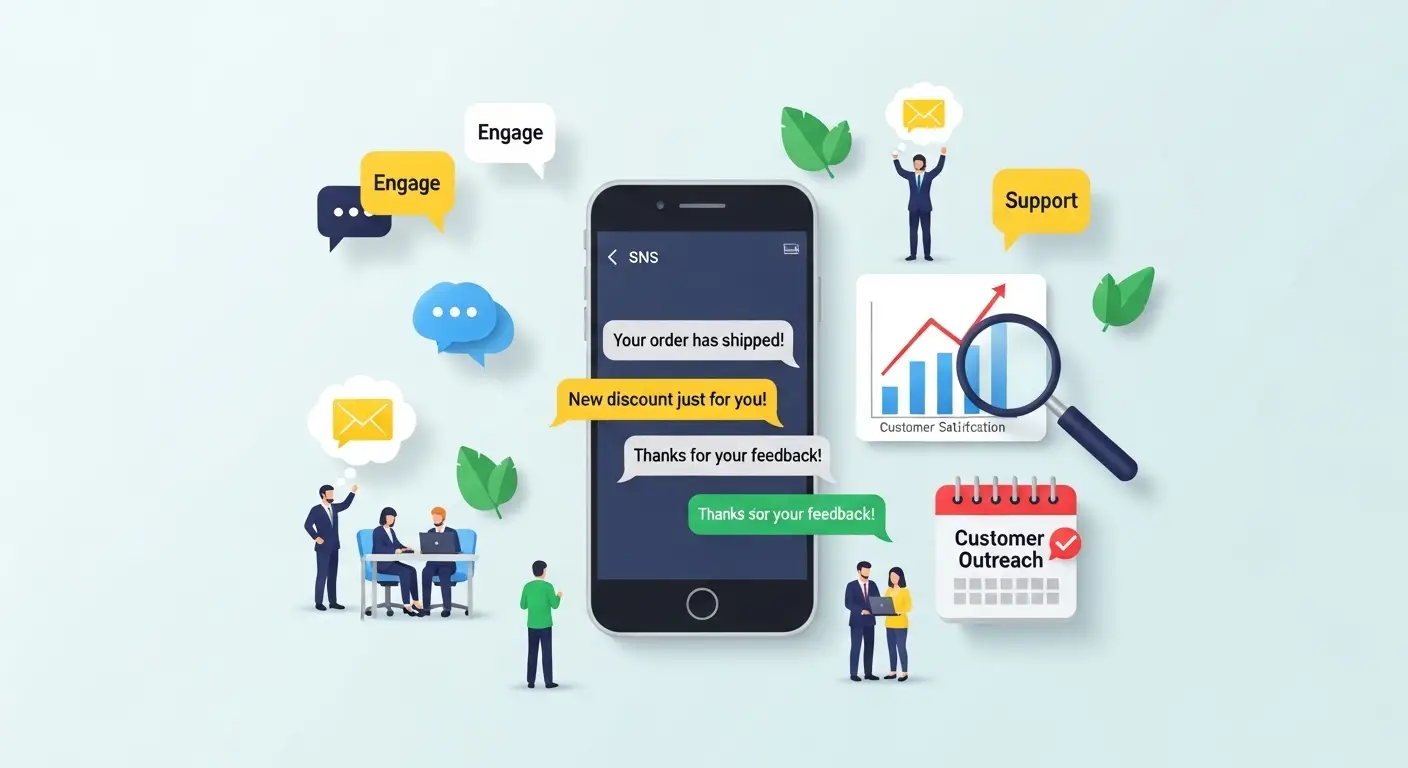
Businesses use communication channels to interact with customers, deliver updates, and maintain relationships. A Business SMS Messaging Service, which uses Short Message Service (SMS) technology, enables companies to send direct text messages to customer mobile devices without requiring internet access. This creates a fast and reliable communication layer between businesses and their audience.
Customer engagement depends on timely interaction, message relevance, and accessibility. SMS messaging supports these requirements through high delivery rates, instant notifications, and compatibility across all mobile devices. This article explains how Business SMS Messaging Services function as a customer engagement tool using entities such as SMS gateways, mobile networks, CRM systems, and automation platforms.
What is a Business SMS Messaging Service as a Customer Engagement Tool?
A Business SMS Messaging Service is a communication system that enables companies to send and receive text messages with customers to improve interaction, deliver information, and maintain engagement.
This service operates through SMS gateways, which connect business platforms to telecom carriers such as Vodafone, AT&T, and T-Mobile. Messages reach customers directly on their mobile phones without requiring applications or internet connectivity. This direct communication increases visibility and response rates.
Customer engagement occurs when businesses use SMS for notifications, promotions, reminders, and support. Entities such as Customer Relationship Management (CRM) systems integrate with SMS platforms to personalise messages based on customer data, purchase history, and behaviour patterns.
How does SMS messaging improve customer engagement?
SMS messaging improves customer engagement by delivering instant, direct, and personalised communication that increases response rates and interaction frequency.
SMS messages achieve open rates above 90 percent within minutes, according to mobile communication studies. This speed allows businesses to send time-sensitive information such as appointment reminders, order updates, and service alerts. Customers receive and read messages quickly, which increases engagement consistency.
The relationship between SMS platforms and CRM systems allows targeted messaging. Businesses segment audiences using attributes such as location, purchase behaviour, and demographics. This creates relevant communication that strengthens customer interaction and satisfaction.
What are the core components of a Business SMS Messaging Service?
The core components include SMS gateways, APIs, databases, automation systems, and mobile network operators.
Each component plays a defined role in delivering messages and managing engagement processes.
What is an SMS Gateway?
An SMS Gateway is a communication interface that connects business applications to telecom networks. It converts digital messages into SMS format and routes them through mobile carriers. This allows businesses to send bulk messages efficiently.
What is an SMS API?
An SMS API (Application Programming Interface) enables software systems to integrate messaging functions. Platforms such as Twilio and Nexmo provide APIs that allow developers to automate message sending, receive replies, and track delivery status.
What is a Customer Database?
A customer database stores user data such as phone numbers, preferences, and interaction history. This data supports segmentation and personalisation strategies within SMS campaigns.
What is SMS Automation?
SMS automation uses predefined rules and workflows to send messages based on triggers. Examples include sending a confirmation message after a purchase or a reminder before an appointment. Automation improves efficiency and consistency.
What are Mobile Network Operators?
Mobile network operators such as Verizon and Orange handle message transmission between SMS gateways and end-user devices. They maintain infrastructure that delivers messages across regions and devices.
What types of messages are used in Business SMS engagement?
Business SMS engagement uses transactional messages, promotional messages, and conversational messages to interact with customers.
Each message type serves a specific engagement function.
What are transactional SMS messages?
Transactional SMS messages deliver essential information related to customer actions. These include order confirmations, payment alerts, and appointment reminders. They provide value by keeping customers informed.
What are promotional SMS messages?
Promotional SMS messages focus on marketing campaigns such as discounts, product launches, and special offers. These messages increase sales opportunities and customer interest.
What are conversational SMS messages?
Conversational SMS messages allow two-way communication between businesses and customers. This includes customer support, feedback collection, and query resolution. It strengthens relationships through direct interaction.
What are the benefits of using SMS for customer engagement?
SMS provides high open rates, immediate delivery, broad reach, and personalised communication that strengthens customer engagement.
These benefits result from the structure of mobile communication systems.
How does SMS achieve high open rates?
SMS messages appear directly in the default messaging application of mobile devices. Unlike email or apps, no additional platform is required. This increases visibility and ensures messages are read quickly.
How does SMS provide immediate delivery?
SMS operates through telecom networks that prioritise message transmission. Messages reach users within seconds, making it suitable for time-sensitive communication.
How does SMS reach a wider audience?
SMS works on all mobile phones, including feature phones and smartphones. This compatibility allows businesses to engage customers without relying on internet access or app installations.
How does SMS support personalisation?
Integration with CRM systems enables businesses to customise messages using customer names, preferences, and behaviour data. Personalised communication improves engagement and response rates.
How does SMS integrate with other customer engagement systems?
SMS integrates with CRM systems, marketing automation platforms, and analytics tools to create a unified engagement ecosystem.
This integration strengthens communication strategies.
How does SMS integrate with CRM systems?
CRM systems such as Salesforce store customer data and interaction history. SMS platforms use this data to send targeted messages based on user behaviour and preferences.
How does SMS integrate with marketing automation tools?
Marketing automation platforms such as HubSpot trigger SMS campaigns based on user actions. For example, abandoned cart notifications are sent automatically to customers who do not complete purchases.
How does SMS integrate with analytics tools?
Analytics tools track metrics such as delivery rates, open rates, and response rates. Businesses use this data to evaluate campaign performance and improve messaging strategies.
What compliance and regulations apply to Business SMS messaging?
Business SMS messaging follows regulations such as TCPA, GDPR, and opt-in consent requirements to protect user privacy and data security.
Compliance ensures ethical communication practices.
What is TCPA compliance?
The Telephone Consumer Protection Act (TCPA) regulates SMS marketing in the United States. Businesses must obtain explicit consent before sending promotional messages.
What is GDPR compliance?
The General Data Protection Regulation (GDPR) governs data privacy in the European Union. Businesses must handle customer data securely and provide clear consent options.
What is opt-in and opt-out compliance?
Customers must voluntarily subscribe to SMS communication. Businesses must provide an opt-out option in every message, allowing users to stop receiving messages.
What are the key use cases of SMS in customer engagement?
SMS supports customer engagement through notifications, marketing campaigns, customer support, and feedback collection.
These use cases demonstrate its versatility.
How is SMS used for notifications?
Businesses send alerts such as delivery updates, appointment reminders, and account notifications. These messages keep customers informed and reduce uncertainty.
How is SMS used for marketing campaigns?
Promotional campaigns use SMS to share offers, discounts, and product updates. This increases customer interaction and purchase activity.
How is SMS used for customer support?
Two-way messaging allows customers to ask questions and receive assistance. This improves service accessibility and satisfaction.
How is SMS used for feedback collection?
Businesses send surveys and feedback requests through SMS. Customers respond quickly due to the simplicity of text messaging.
What challenges exist in SMS customer engagement?
Challenges include message saturation, compliance requirements, and limited content format.
Understanding these challenges improves strategy planning.
What is message saturation?
Frequent messaging leads to user fatigue. Customers lose interest when messages become repetitive or irrelevant.
What are compliance challenges?
Strict regulations require businesses to manage consent and data protection. Failure to comply results in penalties and reduced trust.
What are format limitations?
SMS supports only text and limited characters. This restricts visual communication compared to multimedia channels such as email or apps.
What are the future trends in Business SMS messaging?
Future trends include AI-driven messaging, RCS technology, and omnichannel integration to enhance customer engagement.
These trends reflect technological development.
What is AI-driven SMS messaging?
Artificial Intelligence analyses customer data to create personalised messages. AI systems predict user behaviour and optimise message timing.
What is RCS messaging?
Rich Communication Services (RCS) enhance SMS with images, buttons, and interactive features. It improves user experience beyond traditional text messaging.
What is omnichannel integration?
Omnichannel communication connects SMS with email, social media, and apps. Businesses create consistent messaging across multiple platforms.
Unique FAQs
What is the main purpose of a Business SMS Messaging Service?
A Business SMS Messaging Service delivers direct communication between companies and customers to improve engagement and information flow.
Does SMS messaging require internet access?
No, SMS messaging works through telecom networks and does not require internet connectivity.
What industries use SMS for customer engagement?
Retail, healthcare, banking, logistics, and e-commerce use SMS for communication and notifications.
How secure is SMS communication?
SMS uses telecom infrastructure, but sensitive data requires additional encryption methods for security compliance.
What is the typical SMS character limit?
A standard SMS message contains 160 characters, while longer messages are split into multiple segments.
How do businesses measure SMS campaign performance?
Businesses track delivery rates, open rates, response rates, and conversion metrics using analytics tools.
Can SMS be automated for customer engagement?
Yes, SMS automation systems send messages based on triggers such as purchases, sign-ups, and scheduled events.
What is the difference between SMS and messaging apps?
SMS uses telecom networks and works on all mobile devices, while messaging apps require internet access and specific applications.