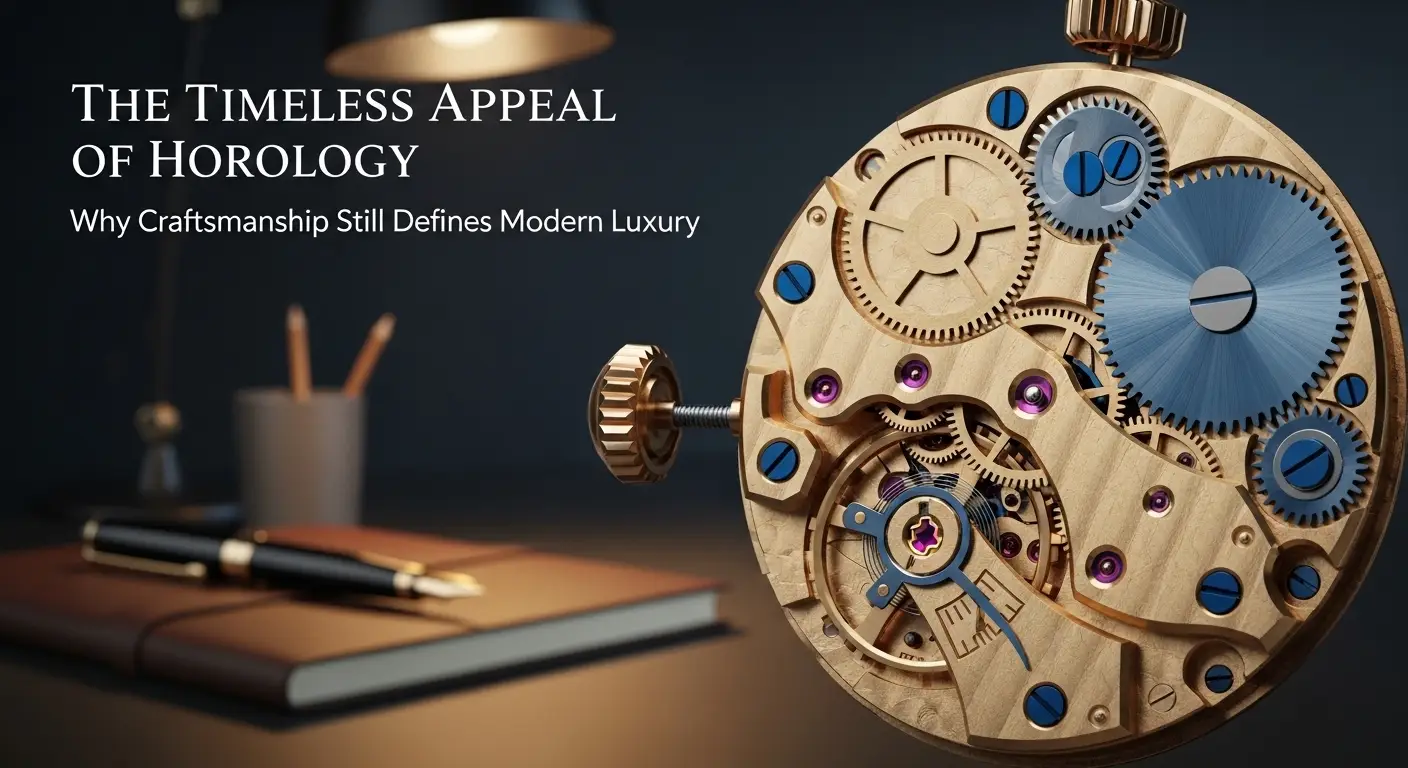
In an era dominated by rapid technological advancement and the fleeting nature of digital trends, there remains a steadfast appreciation for the mechanical and the tangible. For many in the United Kingdom, the allure of a finely tuned timepiece transcends simple utility. It is not merely about tracking the minutes and hours of a busy day but about owning a piece of engineering history. Horology represents a unique intersection of art, science, and heritage, offering a sense of permanence in an increasingly disposable world.
The British affinity for high-quality watchmaking is well documented, stretching back centuries to the innovators of the industrial age. Today, that passion manifests in a thriving community of collectors and enthusiasts who value the intricate dance of gears and springs over the convenience of a silicon chip. Choosing a luxury timepiece is a rite of passage, often marking significant personal or professional milestones. It is an investment in a legacy that can be passed down through generations, maintaining its value and its story long after other gadgets have become obsolete.
The Gold Standard of Precision: Exploring the Heritage of Omega watches
When discussing the giants of the industry, few names command as much respect for their contributions to precision and exploration. The journey of Omega watches is intrinsically linked to some of humanity’s greatest achievements. From the depths of the ocean to the silent expanse of space, these instruments have been trusted by pioneers who required absolute reliability under extreme conditions. For the British enthusiast, this brand represents more than just a style choice; it is a symbol of a relentless pursuit of perfection that mirrors the nation’s own history of exploration and discovery.
Modern horology has reached a peak where technical specifications are as important as aesthetic appeal. The introduction of Master Chronometer certification has set a new benchmark for the industry, ensuring that timepieces are not only accurate but also resistant to the magnetic fields that permeate our modern environments. This dedication to functional excellence ensures that a luxury watch remains a dependable companion for the modern professional, whether they are navigating the boardroom or the great outdoors.
The Master Co-Axial Revolution: Engineering Excellence
The heart of any significant timepiece lies in its movement. One of the most important developments in recent decades has been the refinement of the escapement, the mechanism that regulates the release of energy in a mechanical watch. By reducing friction, watchmakers have been able to increase the longevity and stability of their movements, requiring less frequent servicing and providing greater accuracy over time.
This engineering feat is particularly relevant for those who appreciate the technical nuances of their possessions. A mechanical watch is a miniature universe of hundreds of components working in perfect harmony. In the UK, where appreciation for fine engineering is part of the cultural fabric, the move toward anti-magnetic materials and silicon balance springs has been met with great acclaim. It allows the wearer to enjoy the traditional charm of a mechanical movement without the vulnerabilities that used to plague vintage models.
The Investment Value of Luxury Timepieces
While many purchase a luxury watch for the pleasure of wearing it, there is an undeniable financial aspect to high-end horology. In a volatile economic climate, tangible assets with a proven track record of value retention become highly attractive. Iconic models from reputable houses often appreciate over time, especially those with unique historical significance or limited production runs.
The British secondary market for watches is one of the most robust in the world. Collectors in London, Manchester, and beyond carefully monitor auction results and market trends to identify pieces that offer both aesthetic satisfaction and long-term growth potential. However, the true value of a watch often lies in its emotional weight. A timepiece worn during a wedding, the birth of a child, or a major career promotion carries a sentimental value that far outweighs its market price. It becomes a tactile memory, a constant reminder of life’s most important chapters.
Aesthetic Versatility: From the Deep Sea to Black Tie
One of the reasons luxury horology remains so relevant in the modern British wardrobe is its incredible versatility. A well-designed dive watch is as at home under the sleeve of a tailored suit as it is on a casual weekend in the Cotswolds. The design language of professional timepieces has evolved to be both rugged and refined, utilising materials like high-tech ceramics, precious metals, and scratch-resistant sapphire crystal.
For the modern gentleman or lady, a watch is often the only piece of jewellery worn daily. It serves as a subtle indicator of taste and personality. Whether one prefers the understated elegance of a minimalist dress watch or the complex functionality of a multi-dial chronograph, the choice of timepiece says a great deal about the wearer’s values. It suggests an appreciation for detail, a respect for time, and an understanding of the balance between form and function.
Future-Proofing Tradition in the Digital Age
As we look toward the future, the role of the mechanical watch continues to evolve. While smartwatches offer a myriad of features, they lack the soul and longevity of a mechanical instrument. A smartwatch is a piece of consumer electronics with a limited lifespan; a mechanical watch is a piece of art designed to last a century. We are seeing a trend where individuals wear both, using a digital device for fitness tracking and a mechanical masterpiece for everything else.
Manufacturers are responding to this dual-world existence by incorporating even more advanced materials. We see the use of titanium for lightweight durability and the development of new alloys that provide a unique lustre while remaining incredibly hard-wearing. This ensures that the traditional watch remains competitive and desirable, offering a tactile and visual experience that a screen simply cannot replicate.
A Legacy on the Wrist
The enduring popularity of high-end horology in the UK is a testament to our collective respect for craftsmanship and history. By choosing a timepiece with a storied past and a technically superior future, the wearer connects themselves to a lineage of excellence. It is a choice that celebrates the slow and the deliberate in a world that is often too fast.
Ultimately, the best watch is one that resonates with the individual on a personal level. It should be a source of pride and a reliable tool, standing as a quiet guardian of the wearer’s most precious resource: time. As the industry continues to innovate, the core principles of reliability, beauty, and precision will remain the guiding lights for collectors and first-time buyers alike.